
Lava Thomas

Lava Thomas tackles issues of race, gender, representation and memorialization through a multidisciplinary practice that spans drawing, painting, photography, sculpture, and site-specific installations. Drawing from her family’s Southern roots, current socio-political events, intersectional feminism and African American protest and devotional traditions, Thomas’s practice centers ideas that amplify visibility, healing, and empowerment in the face of erasure, trauma and oppression.
“My practice really is based on creating the works that I want to see in the world, and telling the kinds of stories that I’m not seeing with my work, and creating the kinds of change that I’d like to see societally that my work can make.”
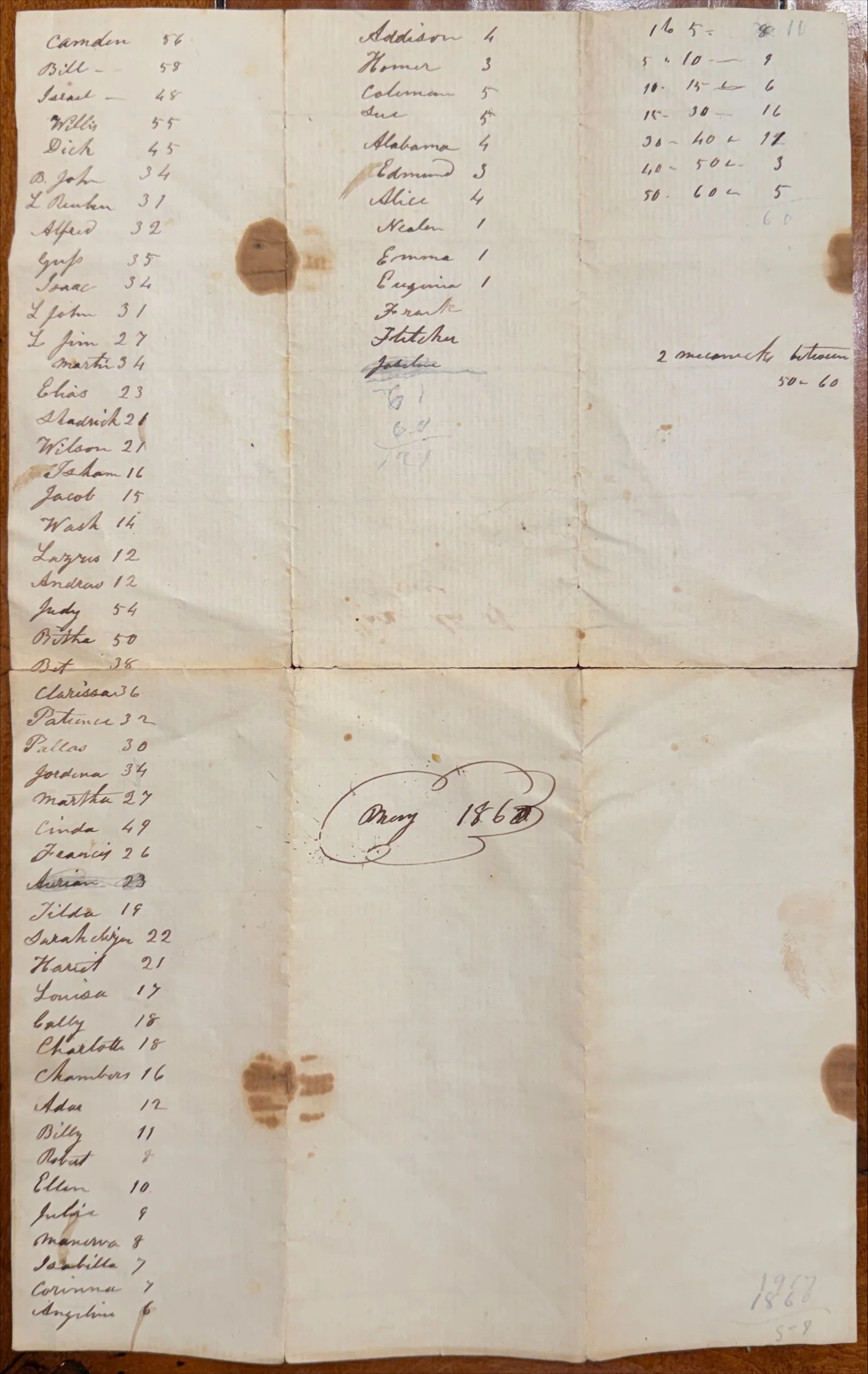
The Slaughter List, Illuminated is based on a handwritten list of enslaved people recorded by the enslaver of the Slaughter Plantation. The original document functioned as an instrument of ownership, reducing human lives to names and ages recorded for the purpose of accounting and control. In this work, however, each name and age from the list is rewritten by hand in gold calligraphy on a single sheet of handmade indigo paper, expanding and transforming a compressed enumeration of property into a field of singular encounters that require time and sustained attention.
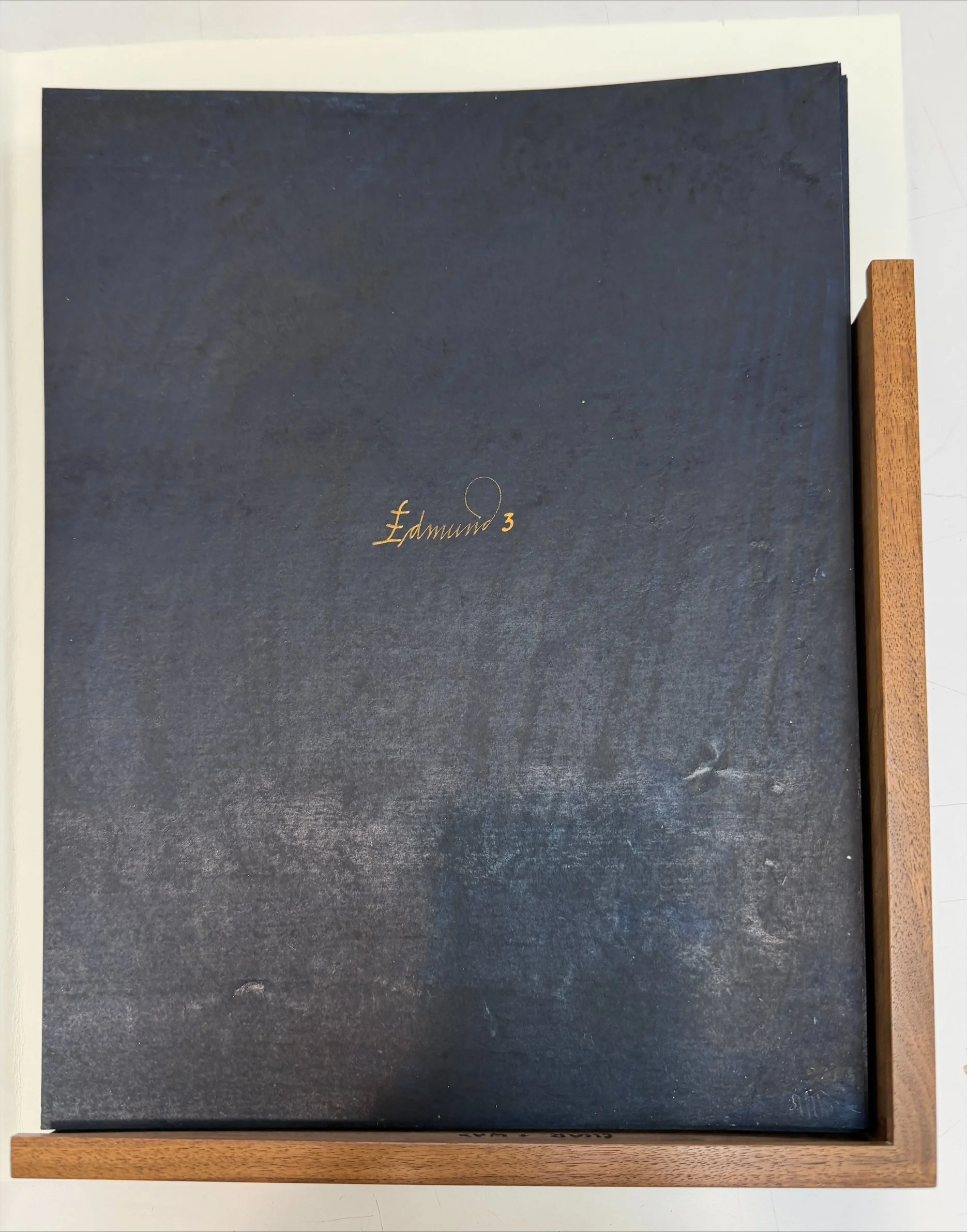
The Slaughter List, Illuminated (2026)
Writing is the central act. As a fifth-generation descendant of a woman who was denied literacy under enslavement, Thomas approaches this labor as custodianship, reclaiming writing as an assertion of sovereignty rather than control. The ages recorded on the list range from no age noted - suggesting infants - to children and adults, with the oldest person listed at fifty-eight years old. The absence of elderly people on the list makes the violence of enslavement visible as a system that brutalized and shortened lives, rendering old age largely unattainable, and elderly human beings expendable.
Indigo carries layered and contradictory histories. In West and Central African societies, it was cultivated and dyed through highly skilled, often women-led knowledge systems embedded in ritual, social identity, and care. Under enslavement, that knowledge was violently extracted and repurposed within plantation economies tied to forced labor and global trade. Gold, long associated with sacred texts, genealogies, and illuminated manuscripts across African, Islamic, and European traditions, signals value, permanence and authority. In The Slaughter List, Illuminated, indigo and gold operate as materials of power and care, transforming a document of violence and domination into a space of ethical attention, where each life is rendered precious, and each name is written as the restoration of a self-sovereign human life.